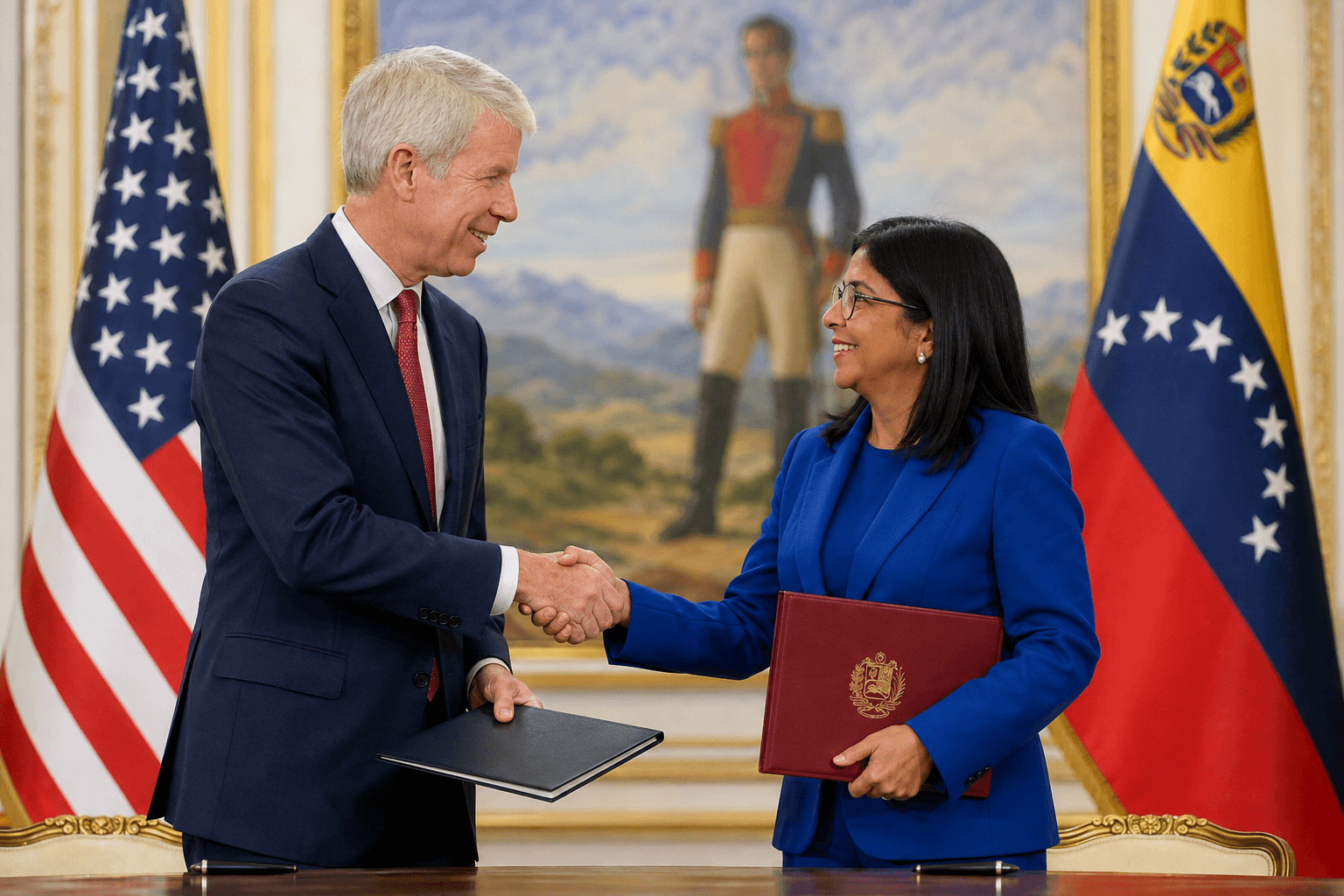

US Energy Secretary Chris Wright oversaw new agreements with Chevron, ENI and GE Vernova in Caracas, part of a broader deal granting Washington control over a large share of Venezuela’s oil reserves.
US Energy Secretary Chris Wright traveled to Caracas this week to finalize a series of energy agreements between the United States and Venezuela, including new investment deals with oil giant Chevron, Italy’s ENI and US energy firm GE Vernova. The deals, described by Wright as worth “tens of billions of dollars,” build on a controversial broader agreement announced in late August that gives the US control over roughly one-fifth of Venezuela’s oil reserves.
Wright met with Venezuela’s interim President Delcy Rodriguez at the Miraflores Presidential Palace to oversee the signings, framing the agreements as a turning point for Venezuela’s long-troubled oil industry.
WHAT HAPPENED?
Wright arrived in Caracas on September 1 and met with Rodriguez the following day to finalize a package of energy deals. Chevron announced plans to invest more than $7 billion through 2031 to boost production in Venezuela’s Orinoco Belt to around 600,000 barrels per day. Additional deals were signed with ENI and GE Vernova, alongside broader agreements with other companies including BP, Shell and Repsol as part of Venezuela’s push to overhaul its energy sector.
The visit followed a separate, larger deal announced on August 28 that grants a company called North American Blue Energy Partners (NABEP), owned by Venezuelan businessman Alejandro Betancourt, long-term concessions over 17 oilfields holding an estimated 65 billion barrels of reserves. Wright told reporters that Venezuelan oil production could more than double by the end of the decade, from levels recorded in January, when Nicolas Maduro was removed from power and Rodriguez took over as interim leader.
WHAT OFFICIALS / SOURCES ARE SAYING
Wright told reporters in Caracas that the investments would bring “peace, opportunity and prosperity to the people of Venezuela and to the people of the United States.” At a joint press conference, he called the day “transformative” for the country’s energy sector.
Rodriguez has previously thanked President Trump and Secretary of State Marco Rubio for the broader oil agreement, saying it would help transform Venezuela into a regional energy “powerhouse.” Critics, however, have accused her government of ceding Venezuela’s resource sovereignty, and have raised questions about Betancourt’s role as an intermediary in the largest of the deals.
KEY FACTS
- Location: Caracas, Venezuela (Miraflores Presidential Palace)
- Date: Deals signed September 2–3, 2026
- Key figures: Deals described as worth “tens of billions of dollars” combined
- Chevron investment: More than $7 billion through 2031, targeting 600,000 barrels per day in the Orinoco Belt
- NABEP concession: Control over 17 oilfields holding an estimated 65 billion barrels of reserves
- Production target: Venezuelan oil output could more than double by 2030, according to Wright
WHY THIS MATTERS
The deal marks a significant reversal for Venezuela’s oil sector, which was nationalized under former leader Hugo Chavez two decades ago. Since Maduro’s removal from power in January, Washington has taken an increasingly direct role in shaping Venezuela’s energy policy, including channeling the country’s oil export revenue through a US Treasury account. For American consumers, Wright has said the deal could eventually help lower gasoline prices, though he cautioned that meaningful relief is likely one to two years away due to the time needed to build refining capacity for Venezuela’s heavy crude.
BACKGROUND
Wright’s Caracas visit is his second trip to Venezuela this year and follows the January capture and extradition of former President Nicolas Maduro after US special forces action. Since then, the Trump administration has eased select sanctions to allow Western companies back into Venezuela’s oil sector while maintaining broader sanctions and restrictions on firms tied to Russia, China and Iran. China has objected to losing stakes in oilfields previously operated through joint ventures with Chinese firms, which are being reassigned to NABEP under the new arrangement.
WHAT HAPPENS NEXT?
Analysts expect further details on the financial and legal structure of the deals to emerge in the coming weeks, along with continued scrutiny over the sovereignty and transparency questions raised by critics. Wright has indicated Washington expects US consumers to begin feeling the effects of expanded Venezuelan oil production within the next one to two years.
LATEST UPDATE
The agreements were signed and celebrated at a joint press conference on September 2 and September 3, with officials from both governments describing the deals as a milestone in reshaping Venezuela’s energy sector. Further rollout details are expected as companies begin implementation.