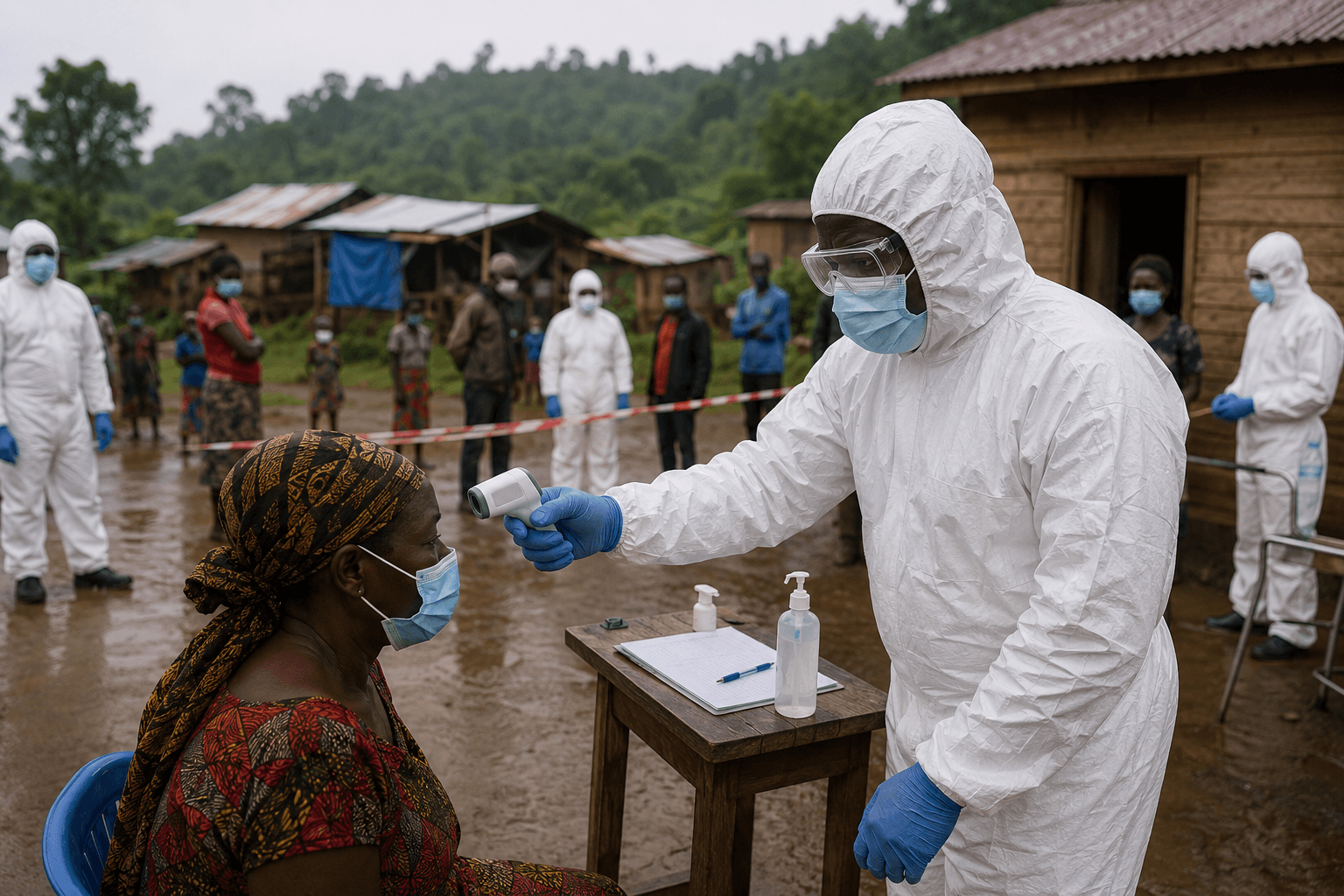

Health officials say the outbreak is spreading faster than containment efforts can keep up, with no approved vaccine yet available for the rare viral strain involved.
The Ebola outbreak in the Democratic Republic of Congo has become the deadliest in the country’s history, with government data showing more than 3,000 deaths among over 6,100 confirmed cases since the outbreak was declared in mid-May. Health authorities say the virus is spreading at an unprecedented pace, faster than health workers can track and contain it.
The outbreak, caused by the rare Bundibugyo strain of Ebola, has now spread across six provinces in the country’s east and northeast, prompting international concern and a scramble to distribute limited vaccine supplies to front-line health workers.
WHAT HAPPENED?
According to Congo’s Ministry of Health, data released this week showed 6,186 confirmed cases and 3,007 deaths since the outbreak was declared a global health emergency in mid-May. The fatality rate stands at roughly 48.6%, with young children experiencing particularly high mortality.
Two additional health zones in North Kivu province were affected in the past week alone, an area where the fatality rate is significantly higher than in other affected provinces. The World Health Organization estimates that around 60% of deaths are occurring outside formal treatment centers, complicating efforts to detect and isolate cases before patients die.
The Africa Centres for Disease Control and Prevention has warned that the true scale of the outbreak could be up to three times larger than officially recorded, citing weak surveillance and contact tracing in the affected regions. Health workers have gone on strike multiple times during the crisis to demand payment of wages, further hampering the response.
WHAT OFFICIALS / SOURCES ARE SAYING
Congo’s Ministry of Health confirmed the case and death figures in data released Wednesday. The World Health Organization has flagged the difficulty of detecting cases before death as a central challenge to slowing the outbreak’s spread.
The International Federation of the Red Cross has previously noted that building trust between health workers and local communities is essential for containment efforts to succeed, given historical resistance to outside intervention in the region.
KEY FACTS
- Location: Democratic Republic of Congo, primarily North Kivu, Ituri and four other provinces
- Date: Outbreak declared mid-May 2026; deaths passed 3,000 in the data released September 2, 2026
- Cases: 6,186 confirmed, including 3,007 deaths, 830 currently isolated or in treatment, and 1,409 recovered
- Fatality rate: Approximately 48.6%
- Virus strain: Bundibugyo ebolavirus, for which there is no approved vaccine or treatment
- Vaccine rollout: Merck’s Ervebo vaccine, licensed for the Zaire strain, is being distributed to front-line health workers in Kisangani, believed to offer partial cross-protection
WHY THIS MATTERS
This outbreak has now become Congo’s deadliest Ebola epidemic on record, surpassing the 2018–2020 outbreak, and ranks second only to the 2014–2016 West African epidemic that killed more than 11,000 people across Guinea, Liberia and Sierra Leone. With the outbreak spreading across six provinces and potentially undercounted by a factor of three, the crisis carries serious implications for regional public health systems, cross-border disease control and the safety of health workers operating in conflict-affected areas.
BACKGROUND
This is not Congo’s first major Ebola crisis; the country has experienced multiple outbreaks over the past decade, including a significant epidemic in North Kivu and Ituri between 2018 and 2020 that was complicated by militia violence and community mistrust. The current outbreak, caused by the less-studied Bundibugyo strain, lacks the well-established vaccines and treatments developed for the more common Zaire strain, leaving responders with fewer tools to slow transmission.
WHAT HAPPENS NEXT?
Health authorities are expected to expand vaccine distribution to additional health zones as supplies allow, while international health bodies continue monitoring the outbreak’s spread into new provinces. Researchers, including teams from the University of Oxford and the International AIDS Vaccine Initiative, are working on vaccine candidates specifically targeting the Bundibugyo strain, though none are yet approved.
LATEST UPDATE
As of the most recent government data, the outbreak continues to expand, and further updates on case counts and vaccine distribution are expected in the coming days as health officials work to contain the spread.