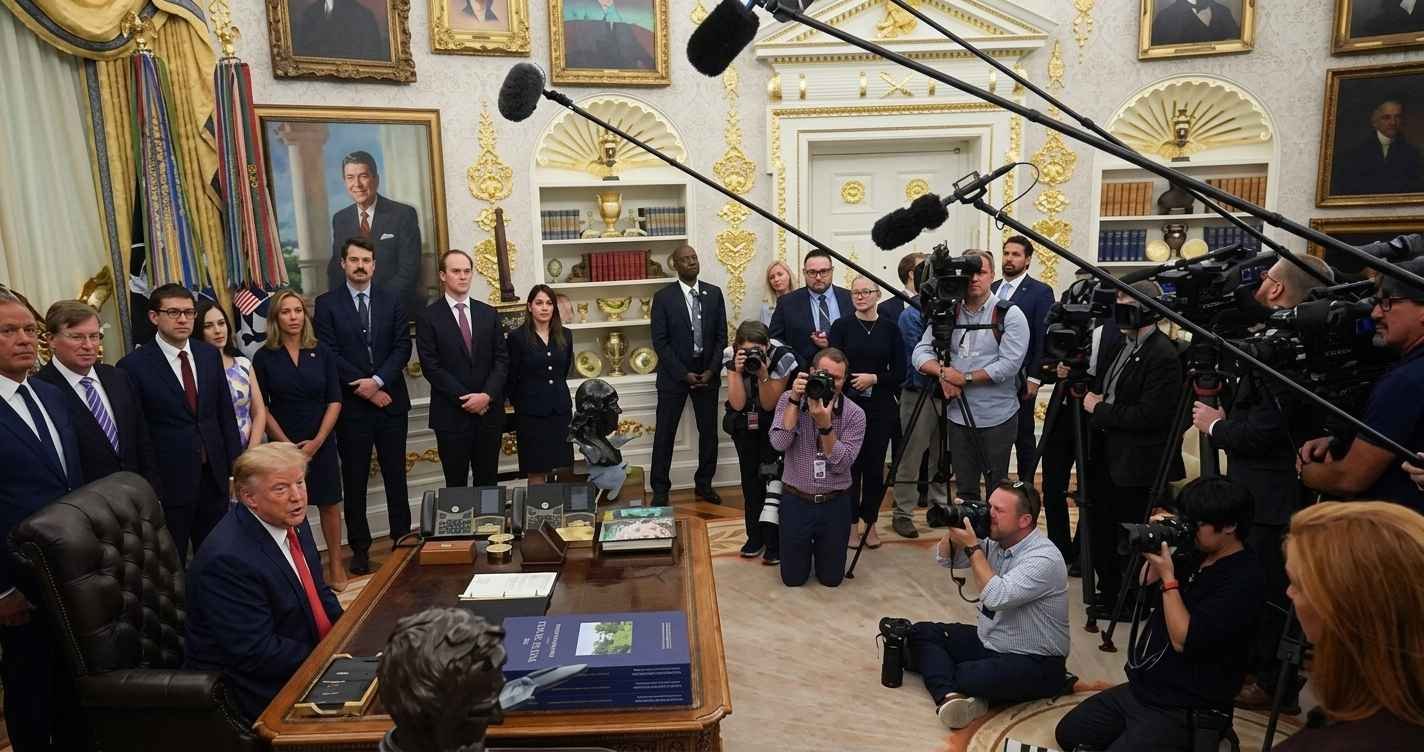
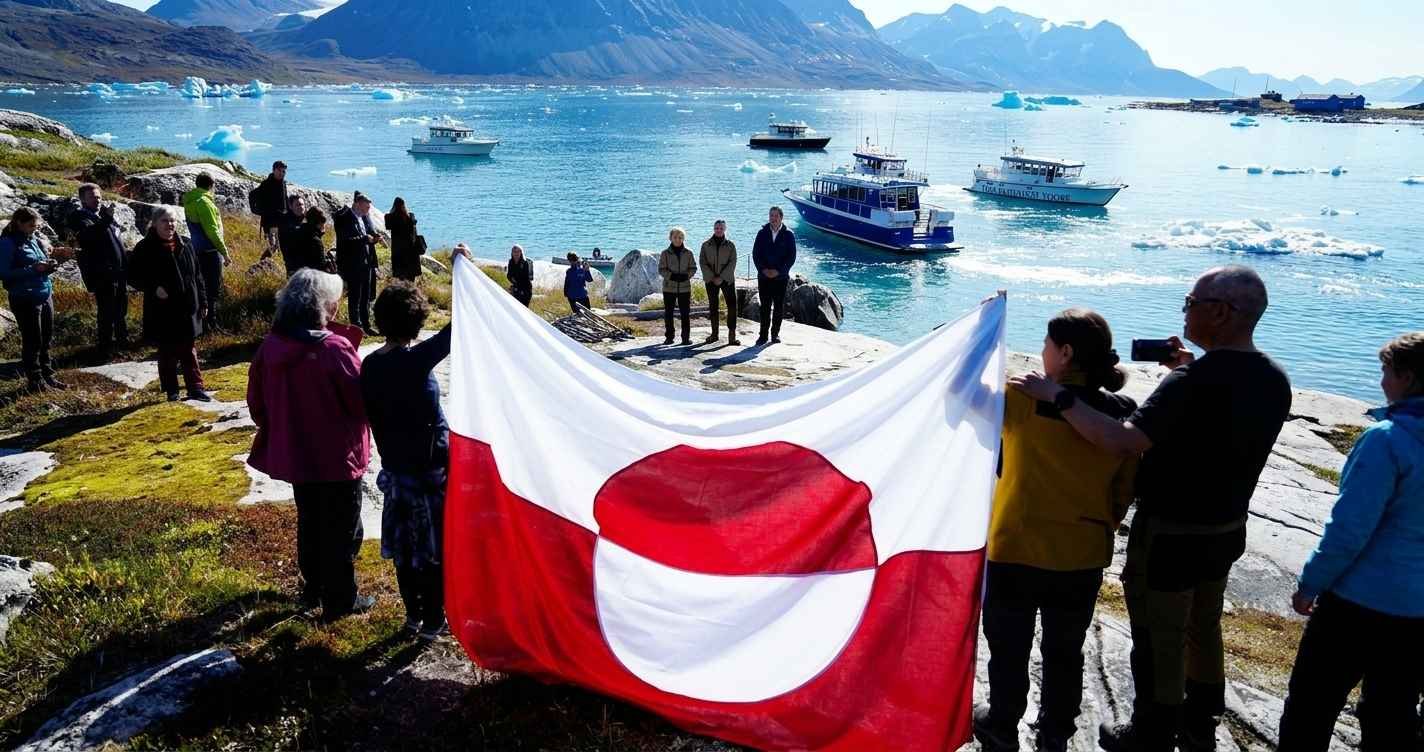

The United States and Denmark have officially reached a deal over the security of Greenland, bringing a tense, months-long diplomatic standoff to a resolution after President Donald Trump had repeatedly threatened to seize the Arctic territory, including by military force. Trump announced the agreement on Friday, September 19, 2026, in a post on Truth Social, calling it an “Infinite Life” Agreement that gives the United States “permanent control over security, and all other needs, in Greenland.”
The announcement caps off a saga that began in late 2024, when Trump first floated the idea of the U.S. acquiring Greenland, and escalated dramatically over the following two years into open threats of tariffs and military action against a NATO ally. Here’s a complete breakdown of what was actually agreed, how we got here, and what happens next.
Quick Summary (Read This First)
- The U.S. and Denmark announced a security deal over Greenland on Friday, September 19, 2026.
- Trump says the agreement gives the U.S. “permanent control over security, and all other needs” in Greenland, at “NO COST” to the United States.
- The deal bars any U.S. adversary, including Russia and China, from having a military base, presence, or making sensitive investments in Greenland without U.S. approval.
- Denmark’s government says the agreement is expected to be formally signed by all three governments, the U.S., Denmark, and Greenland, next week during the United Nations General Assembly.
- The deal still requires parliamentary action in both Denmark and Greenland before it can take effect.
- Greenland’s government says the agreement recognizes its own interests and right to self-determination.
- Secretary of State Marco Rubio called it a “historic deal” that “permanently and completely” addresses U.S. national security concerns in the Arctic.
- The deal follows nearly two years of escalating pressure from Trump, including tariff threats and refusal to rule out military force to seize the island.
Now let’s look at exactly what was announced and how this crisis unfolded.
What’s Actually in the Deal?
According to Trump’s own announcement and details relayed by administration officials, the agreement covers several key points:
- “Permanent control over security”: Trump says the deal gives the U.S. permanent control over security and “all other needs” in Greenland, though the full legal text of the agreement had not been publicly released at the time of the announcement.
- Guaranteed access and overflight rights: A State Department official said the U.S. was guaranteed permanent access to the island along with overflight rights, potentially allowing the U.S. military to increase the number of bases it operates there.
- A ban on adversary bases and investment: The agreement includes screening mechanisms intended to block investment from Russia and China, and bans any U.S. adversary from establishing a base, maintaining a military presence, or making sensitive investments in Greenland without prior U.S. approval.
- No cost to the U.S.: Trump emphasized the deal comes at “NO COST” to the United States, distinguishing it from his earlier, more direct push to simply purchase the territory outright.
- Greenland remains under Danish sovereignty: Despite the sweeping security language, the agreement reportedly keeps the Arctic territory in Denmark’s hands rather than transferring ownership to the United States, with Greenland and Denmark’s governments both stressing the deal preserves their sovereignty and right to self-determination.
Despite the announcement, Danish officials have not confirmed every specific detail Trump described in his social media posts, and no complete text of the agreement has been made public. The Danish Prime Minister’s office indicated the deal will still need to be formally signed by all three governments, expected next week during the United Nations General Assembly in New York, and will require parliamentary approval in both Denmark and Greenland before it can be fully enforced.
Reactions From All Sides
Secretary of State Marco Rubio was quick to praise the agreement, calling it a “historic deal” and a “huge win for the United States and the American people.” He told Fox News that the deal “permanently and completely addresses our national security concerns in Greenland.”
Greenland’s government struck a notably more measured, diplomatic tone. Jens-Frederik Nielsen, chairman of the Greenland Government, said in a statement that it was “gratifying that we are about to enter into an agreement that ensures and strengthens the security” of Greenland, Denmark, and the U.S., adding that “the agreement recognises Greenland’s interests and our place in international co-operation. It is for the benefit of us all.”
Denmark’s Prime Minister, Mette Frederiksen, said the deal “strengthens security in the Arctic and the North Atlantic area,” though her office notably did not confirm the specifics Trump laid out in his own social media posts, an indication that some daylight remains between how each side is characterizing the finer points of the agreement.
How We Got Here: A Timeline of Trump’s Greenland Push
- December 2024 – Trump renews calls, first made unsuccessfully during his first term, for the U.S. to acquire Greenland, writing that “the ownership and control of Greenland is an absolute necessity” for national security and “freedom throughout the world.”
- Early 2025 – Greenlandic and Danish officials make clear they reject the proposal outright, and Greenland’s newly elected prime minister, Jens-Frederik Nielsen, pushes back publicly, stating “we do not belong to anyone else. We decide our own future.”
- Throughout 2025 – Trump escalates his rhetoric, at one point threatening steep tariffs on Denmark and other countries that did not “go along with” his efforts to acquire Greenland, and declining to rule out the use of military force.
- March-April 2026 – Danish Prime Minister Mette Frederiksen publicly condemns the threats, stating “you cannot annex another country,” and warns that a forced U.S. takeover would effectively mark the end of the NATO alliance. Other NATO members side with Denmark.
- January 2026 – At the World Economic Forum in Davos, Trump announces a vaguer, preliminary security arrangement negotiated with NATO Secretary-General Mark Rutte, while backing away from explicit threats of force, though he stops short of confirming Greenland would become part of the United States.
- September 19, 2026 – The U.S., Denmark, and Greenland finalize a more detailed security agreement, announced by Trump as granting “permanent” U.S. control over the territory’s security, setting up a formal signing during the UN General Assembly the following week.
Throughout this process, polling has consistently shown that Greenlanders overwhelmingly reject the idea of American annexation, even as their government continued participating in security negotiations alongside Denmark and the U.S. to try to find a resolution short of that outcome.
Why Does Trump Want Greenland So Badly?
Trump has consistently framed his interest in Greenland around two core arguments: national security and natural resources.
- Strategic location: Greenland sits in a critical position for Arctic defense and missile detection, and Trump has repeatedly, though without offering public evidence, made claims about Chinese and Russian military activity near the island’s coastline as justification for a stronger U.S. presence.
- Mineral wealth: Greenland holds substantial deposits of rare earth minerals and other resources considered strategically important amid growing global competition, particularly with China, over critical mineral supply chains.
- Arctic competition: As melting ice opens new shipping routes and resource access across the Arctic, Greenland’s location has become increasingly contested among the U.S., Russia, and China, all of whom have shown growing interest in the region’s strategic and economic potential.
This latest deal appears designed to address those stated priorities, guaranteed military access, overflight rights, and a formal block on rival investment, without the U.S. formally annexing the territory outright, a middle-ground outcome that lets the administration claim a major security win while avoiding the far more explosive step of seizing sovereign NATO-ally territory.
How NATO and the Rest of Europe Reacted
Trump’s Greenland push didn’t just strain relations with Copenhagen, it rattled the broader NATO alliance. Denmark warned throughout the standoff that a forced U.S. annexation of a fellow member state’s territory would represent an unprecedented breach of the alliance’s core principles, potentially undermining NATO’s credibility at a moment when unity among member states was already being tested by other global conflicts. Other NATO countries largely sided with Denmark during the dispute, viewing Trump’s threats as a troubling precedent regardless of Greenland’s individual strategic value.
That backdrop helps explain why this week’s announcement is being received with a mix of relief and caution across European capitals. A negotiated security agreement that keeps Greenland under Danish sovereignty, rather than a unilateral seizure, avoids the worst-case scenario NATO allies had been bracing for, even if questions remain about exactly how the new security arrangement will function in practice and whether it sets any new precedent for how the U.S. approaches allied territory it considers strategically important.
The Bottom Line
After nearly two years of escalating rhetoric, tariff threats, and unruled-out military force aimed at a longtime NATO ally, the U.S. and Denmark have landed on a negotiated security arrangement rather than the outright annexation Trump had repeatedly floated. The deal gives Washington expanded military access and a formal block on rival investment in Greenland, while allowing Denmark and Greenland to say publicly that their sovereignty and self-determination remain intact.
Whether that framing holds up once the full legal text is released, and once Danish and Greenlandic lawmakers weigh in, will be the next major test of this agreement. For now, though, a diplomatic standoff that at one point had NATO allies openly worried about the alliance’s future has ended not with a takeover, but with a signed security pact, due to be formalized on the world stage at next week’s UN General Assembly.
What Happens Next
Several important steps still need to happen before this agreement is fully in effect. The deal is expected to be formally signed by representatives of the U.S., Denmark, and Greenland during next week’s United Nations General Assembly session in New York. After that, both the Danish and Greenlandic parliaments will need to take action to approve the agreement domestically before it can be enforced. Until the full legal text is released and those steps are completed, some of the more specific details, including exactly how “permanent” the arrangement is in legal terms, remain unconfirmed by Danish officials.
Frequently Asked Questions About the US-Denmark Greenland Deal
What did the US and Denmark agree to on Greenland?
The two countries reached a security agreement that, according to Trump, gives the U.S. permanent control over security and related needs in Greenland, while Denmark and Greenland retain sovereignty over the territory.
Did the US annex Greenland?
No. Despite months of annexation threats, the agreement keeps Greenland under Danish sovereignty and Greenlandic self-determination, focusing instead on U.S. security access, military presence, and blocking rival investment.
Why did Trump threaten to take Greenland?
Trump cited national security concerns, including Greenland’s strategic Arctic location and its mineral resources, and repeatedly claimed, without public evidence, that Chinese and Russian military forces were active near the island.
When will the Greenland security deal be signed?
The Danish Prime Minister’s office said the deal is expected to be signed by all three governments next week during the United Nations General Assembly.
Does the deal need further approval?
Yes. Parliamentary action is still required in both Denmark and Greenland before the agreement can be fully enforced.
What does Greenland get out of this deal?
According to Greenland’s government, the agreement recognizes the territory’s own interests and its place in international cooperation, and both Denmark and Greenland say it preserves their sovereignty and right to self-determination.
How did Denmark originally respond to Trump’s threats?
Danish Prime Minister Mette Frederiksen publicly condemned the threats, stating that a country cannot simply annex another, and warned that a forced U.S. takeover risked effectively ending the NATO alliance.
Key Takeaways
- The U.S. and Denmark reached a Greenland security agreement on September 19, 2026, resolving a crisis sparked by Trump’s annexation threats.
- The deal grants the U.S. guaranteed security access, overflight rights, and the ability to expand its military presence, while keeping Greenland under Danish sovereignty.
- The agreement blocks Russia, China, and other U.S. adversaries from establishing bases or making sensitive investments in Greenland without U.S. approval.
- Formal signing is expected next week at the UN General Assembly, with parliamentary approval still required in Denmark and Greenland.
- The deal follows nearly two years of escalating tension, including tariff threats and unruled-out military force, that alarmed NATO allies.
- Both Denmark and Greenland have emphasized that the agreement preserves their sovereignty, even as Trump characterizes it as a major U.S. security win.