
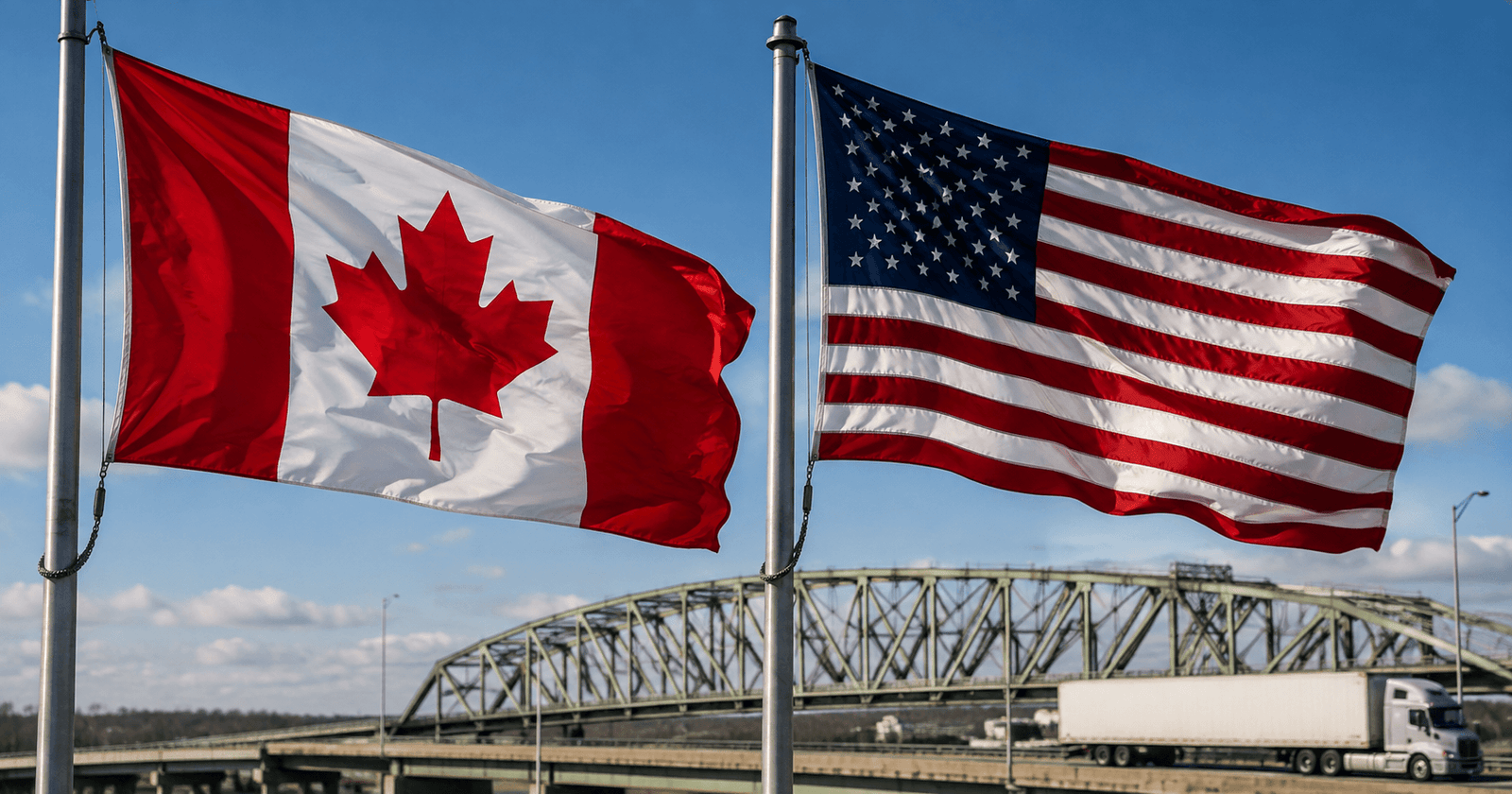

NEWS HOOK: One of the world’s largest trading relationships just took a serious hit, as Canada slapped $20 billion in retaliatory tariffs on American goods, escalating a trade war that has turned two longtime allies into economic rivals.
5W1H Summary
- Who: Canada’s federal government, led by Prime Minister Mark Carney and Finance Minister François-Philippe Champagne, versus the Trump administration
- What: Canada announced roughly $20 billion (C$27.6 billion) in retaliatory tariffs on more than 700 American products
- When: The announcement came on Tuesday, August 25, 2026, with the tariffs set to take effect September 8
- Where: Ottawa, Canada, in direct response to US tariff policy
- Why: Trade talks between the two countries collapsed, after which the US imposed 50% tariffs on a range of Canadian goods
- How: Canada matched the US measures “dollar for dollar, rate for rate,” targeting steel, dairy, appliances, and dozens of everyday goods
What Happened
The latest chapter in the US-Canada trade dispute opened after negotiations between the two governments broke down. Following the collapse, the Trump administration pushed through 50% tariffs on a swath of Canadian goods over the weekend. Canada answered on Tuesday with its own package of duties, ranging from 15% to 50%, covering more than 700 American products worth close to $20 billion annually.
The Canadian countermeasures go well beyond heavy industry. While steel and aluminum face some of the steepest new duties, up to 50% on some products, the list also includes everyday consumer goods: seafood, cheese, clothing, cosmetics, and even toilet paper. Some of these items now carry duties as high as 50%, according to Canadian officials.
Alongside the tariffs, Ottawa unveiled a C$7.5 billion support package for Canadian businesses and workers expected to be hit hardest by the dispute.
Why It Matters
Canada and the United States share one of the most integrated economic relationships in the world, built over decades of cross-border manufacturing, energy trade, and agriculture. A tariff war of this scale threatens to raise prices for ordinary consumers on both sides of the border, from grocery store shelves to car dealerships.
Canadian officials have been candid that the retaliation will come at a cost. Prime Minister Carney acknowledged the decision “will raise costs and reduce choice for Canadians,” even as his government argued it had little choice but to respond.
Key Facts
- Canada’s new tariffs total close to $20 billion (C$27.6-29.8 billion depending on the source) and cover more than 700 to 800 US products
- Duties range from 15% to 50%, with the steepest rates applied to steel, aluminum, furniture, and clothing
- The tariffs take effect September 8, 2026
- Canada is also providing a C$7.5 billion aid package for affected businesses and workers
- Existing Canadian counter-tariffs on US autos remain in place separately from this new package
- The US had already imposed 50% tariffs on Canadian goods over the preceding weekend
Data
Analysts estimate the new duties will affect roughly 5% of Canada’s total exports to the United States. Canada has separately provided more than C$30 billion in tariff-related support to its economy since the trade dispute intensified, according to Canadian officials, underscoring how large a share of the country’s economic policy is now devoted to managing the standoff.
Global Impact
The dispute is being watched closely well beyond North America. Trading partners in Europe and Asia have faced their own tariff pressure from Washington in recent years, and a prolonged US-Canada trade war could reshape supply chains for steel, aluminum, and agricultural goods that ripple through global markets. Ontario, home to much of Canada’s auto and steel manufacturing, is especially exposed, and provincial leaders there have pushed for a tougher response.
Expert Analysis
Finance Minister Champagne framed the decision as one of principle, saying, “We did not choose this conflict, but when our economic integration is used as a weapon rather than the foundation for a win-win partnership, we need to stand up.” US Trade Representative Jamieson Greer offered a different account of the collapsed talks, saying Washington had “sought to accommodate the Canadians” by cutting tariffs on steel, aluminum, and autos before negotiations fell apart.
Trade economists watching the standoff note that both governments appear to be betting the other side will blink first, a dynamic that has repeatedly extended similar disputes in the past rather than resolving them quickly.
Timeline
- Friday: Trade talks between the US and Canada collapse
- Weekend: The US imposes 50% tariffs on a range of Canadian goods
- Tuesday, August 25: Canada announces its own $20 billion retaliatory package plus a C$7.5 billion aid fund
- September 8, 2026: Canada’s new tariffs are set to take effect
What Happens Next
Both sides face pressure to return to the table, but neither has signaled an imminent resolution. Canadian officials have said they expect the overall economic effects of the tariffs to be “moderate,” while continuing to warn businesses to prepare for higher costs. Markets and industry groups on both sides of the border will be watching closely for any sign of renewed talks before the September 8 deadline.
!– wp:heading –>
Frequently Asked Questions
How much are Canada’s new tariffs worth?
Canada’s retaliatory tariffs are worth close to $20 billion (roughly C$27.6 to C$29.8 billion) and cover several hundred American products.
When do the new tariffs start?
Canada’s countertariffs are scheduled to take effect on September 8, 2026.
!– wp:heading –>
What goods are affected?
The list spans steel, aluminum, dairy, appliances, agricultural equipment, pulp and paper, electronics, seafood, clothing, and cosmetics, with duties ranging from 15% to 50%.
Is Canada offering any support to affected businesses?
Yes. The Canadian government announced a C$7.5 billion support package for workers and businesses affected by the dispute.
Sources
!– wp:paragraph –>
This report draws on reporting from France 24, PBS NewsHour, ABC7 New York, CNBC, NPR, and NBC News. This is a developing story and will be updated as more information becomes available.