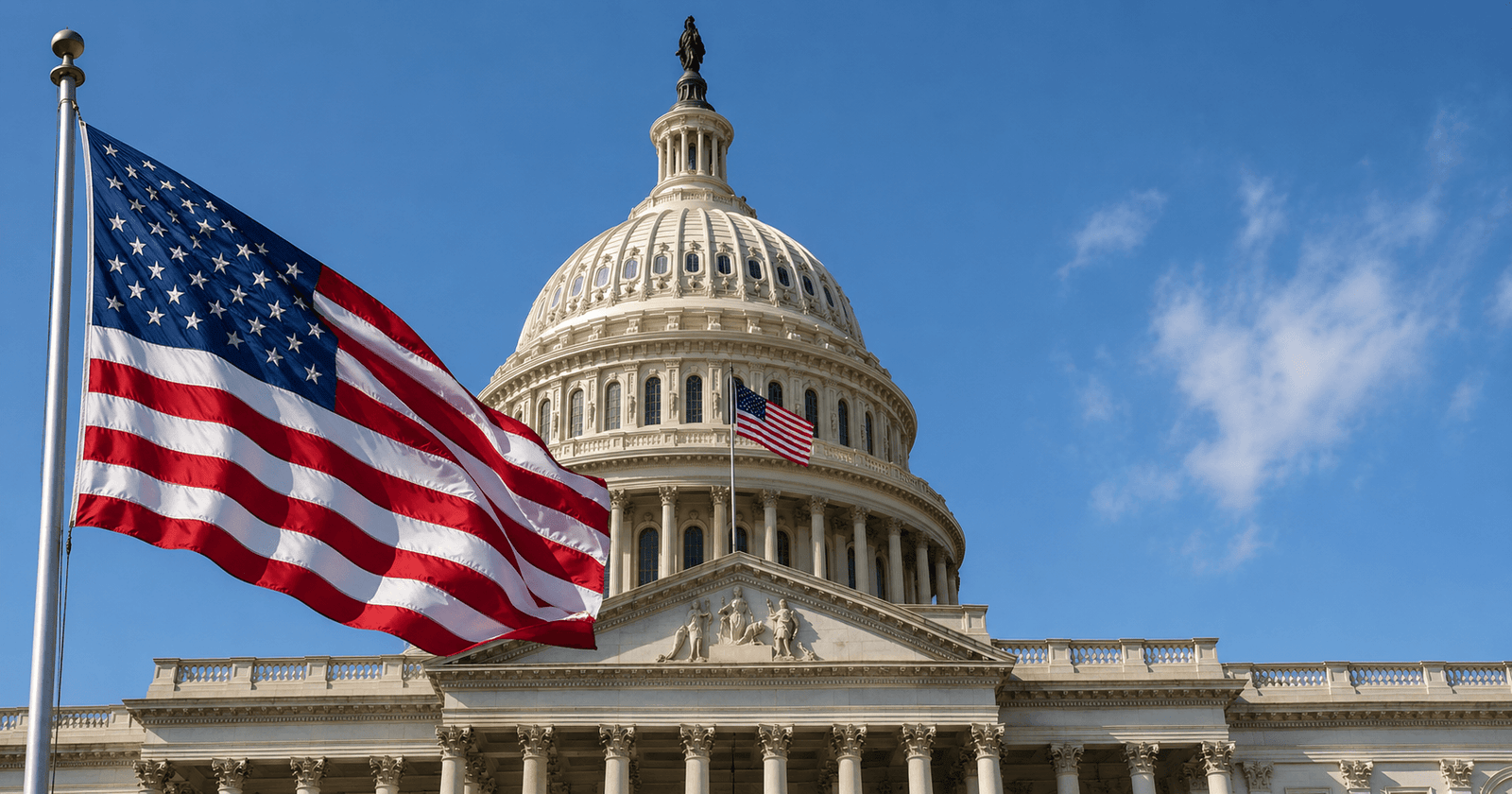

The measure, which cleared the House by a wide bipartisan margin, keeps federal agencies funded at current levels until mid-December.
The US House of Representatives voted Tuesday to pass a short-term government funding bill, avoiding a shutdown just weeks before the November midterm elections. The bill passed by a vote of 370-48 and now heads to President Donald Trump’s desk for his signature.
The continuing resolution keeps federal agencies funded at current levels through December 11, giving lawmakers additional time to negotiate a full-year spending package.
WHAT HAPPENED?
The House approved the stopgap spending bill, also known as a continuing resolution, after it had already cleared the Senate. The Senate passed the measure by a wide margin in early August before leaving for its summer recess. With the fiscal year set to end on September 30, lawmakers needed to act to keep federal agencies operating into October and beyond.
The legislation temporarily blocks a proposed rule from the Office of Management and Budget that would place federal grant funding under review by political appointees, and it includes language preventing the Trump administration from shifting funds from other programs toward Border Patrol operations. Some hard-line Republicans opposed the bill, in part over a provision delaying a ban on intoxicating hemp products that the White House and cannabis industry groups had sought to postpone.
House Speaker Mike Johnson told reporters ahead of the vote that Congress was working to avoid another shutdown. The bill’s passage comes after a turbulent year in which the federal government endured what lawmakers described as an unprecedented total of 161 days of partial shutdowns, driven by disputes over health insurance subsidies and oversight of federal immigration enforcement.
WHAT OFFICIALS / SOURCES ARE SAYING
Republican Representative Tom Cole of Oklahoma, chairman of the House Appropriations Committee, said the bill gives the country and federal workers certainty that the government will remain open and that service members will continue to be paid.
Democratic Representative Rosa DeLauro of Connecticut, the senior Democrat on the Appropriations Committee, argued the bill represented a step toward Congress reasserting control over federal spending following a series of unilateral actions by the Trump administration, including cuts to federal agencies and the elimination of the US Agency for International Development.
Speaker Johnson said the measure simply holds funding steady at current levels through December 11 while Republicans continue working to complete full-year appropriations bills.
KEY FACTS
- Vote result: House passed the bill 370-48
- Funding period: Current spending levels extended through December 11, 2026
- Senate vote: Passed 90-6 in early August before recess
- Next step: Bill heads to President Trump for signature
- Included provisions: Blocks political review of federal grants; bars shifting funds to Border Patrol from other programs
- Progress on full-year bills: The House has passed three of 12 required spending bills; the Senate has passed none
WHY THIS MATTERS
The bill removes the immediate threat of a fourth government shutdown heading into a politically sensitive election season, when voters are already concerned about the cost of living. A shutdown so close to the midterms could have carried significant political risk for both parties. However, the stopgap does not resolve the country’s broader fiscal challenges, and lawmakers still face the difficult task of passing 12 full-year spending bills once the new session resumes in December.
BACKGROUND
Since the start of President Trump’s second term, Congress has been marked by repeated, contentious standoffs between the Republican majority and the Democratic minority over federal spending, resulting in a combined 161 days of partial government shutdowns tied to disputes over Affordable Care Act subsidies and immigration enforcement oversight. Neither party wanted a repeat of those shutdowns to overshadow this year’s midterm campaigns, contributing to the bipartisan support the stopgap bill received.
WHAT HAPPENS NEXT?
President Trump is expected to sign the bill into law. Lawmakers will then face a compressed timeline in December to negotiate the 12 individual appropriations bills needed to fund the government for the full 2027 fiscal year, a process that could be shaped significantly by the outcome of the November 3 midterm elections.
LATEST UPDATE
The bill is now awaiting the president’s signature. The situation remains a work in progress, as Congress must still resolve full-year funding decisions before the new stopgap deadline arrives in December.