
A divided Supreme Court ruled that a preservationist group likely lacks legal standing to block the project, allowing construction to proceed without settling whether the ballroom itself is lawful.
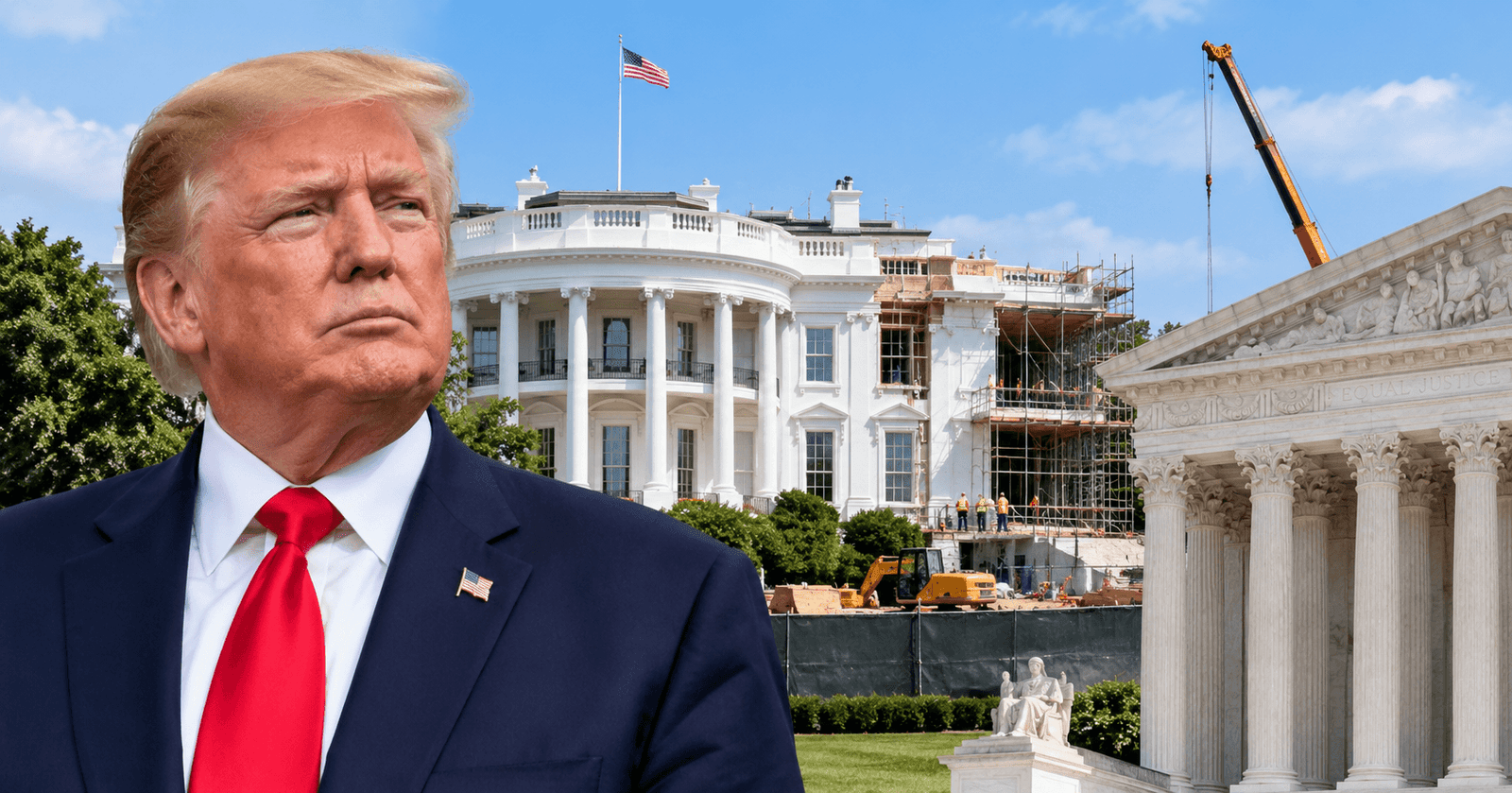
The Supreme Court has ruled that construction of President Donald Trump’s White House ballroom can continue, lifting a lower court block on above-ground work in a decision issued Monday. The 5-4 ruling did not address whether the project itself is legal, instead finding that the group challenging it likely does not have the legal standing needed to sue.
The ruling is the latest turn in a months-long legal battle over the project, which involved the demolition of the White House’s East Wing last fall.
WHAT HAPPENED?
In an unsigned order, a majority of the nine justices found that the National Trust for Historic Preservation, the group that brought the lawsuit, likely had not shown the kind of concrete, personal injury required to have legal standing to sue over the project. The trust’s claim rested in part on a declaration from one of its board members, a Washington-based architectural historian who said she was personally affected by the demolition of the East Wing, which she said she regularly walked past.
Chief Justice John Roberts joined the court’s three liberal justices in dissent, a notable break from the five Republican-appointed justices in the majority, which included all three of President Trump’s own appointees. Roberts wrote that construction had proceeded for the better part of a year despite what he considered was likely an unlawful process.
The case had already worked its way through several rounds of litigation. A federal judge in Washington initially ruled against the administration in the spring, finding that further above-ground construction should stop while the case continued, though he allowed work to proceed temporarily during the appeal. A federal appeals court then ruled 2-1 against the administration, concluding that Congress had not given the president authority to reshape the exterior of the White House to fit one person’s preferences. The administration then asked the Supreme Court to step in, arguing it would soon be too late to halt the nearly complete project.
WHAT OFFICIALS / SOURCES ARE SAYING
President Trump celebrated the ruling on social media, describing the ballroom and an associated underground complex as vital to national security and predicting it will be recognized as a landmark project once finished. According to court filings cited in earlier coverage, the administration has said the roughly $400 million, privately funded project was more than 65 percent complete as of mid-August, with construction crews working around the clock.
Brent Leggs, president and chief executive of the National Trust for Historic Preservation, said the organization was disappointed with the ruling and disagreed with the majority’s reasoning on standing. He noted that the court did not weigh in on whether the ballroom project is actually legal, and said the trust’s broader argument, that a president does not have unilateral authority to alter such a significant national landmark, remains unresolved.
KEY FACTS
- Location: White House, Washington, D.C.
- Ruling date: Monday, August 31, 2026
- Vote: 5-4, with Chief Justice Roberts joining the court’s three liberal justices in dissent
- Project status: Construction reported to be more than 65 percent complete as of mid-August, with an estimated cost of at least $300 million to $400 million
- Latest development: The underlying lawsuit over whether the project itself is legal remains unresolved and may continue in lower courts
WHY THIS MATTERS
The case touches on broader constitutional questions about the limits of presidential authority over federal property and historic buildings, and about who has legal standing to challenge such decisions in court. Because the justices avoided ruling on the legality of the ballroom itself, the underlying dispute over presidential power to alter the White House complex remains open for future litigation.
The ruling also has political and symbolic significance, given the controversy that followed the demolition of the White House East Wing last year to make way for the new structure.
BACKGROUND
The dispute began after the East Wing was torn down last fall to make room for the ballroom project. That decision drew criticism from historic preservation advocates and some lawmakers, who argued that changes of that scale to a building with such historical significance required congressional involvement. The National Trust for Historic Preservation filed suit, and the case moved through a district court and a federal appeals court before reaching the Supreme Court, which had already issued a temporary stay allowing construction to continue while it considered the case more fully.
WHAT HAPPENS NEXT?
With the Supreme Court’s order in place, construction is expected to continue as the underlying legal challenge proceeds through the lower courts on the question of standing and, potentially, the legality of the project itself. The ballroom and its associated underground complex are reportedly targeted for completion in the summer of 2028.
LATEST UPDATE
As of the latest reporting, construction continues at the White House site, and the National Trust for Historic Preservation has indicated the broader legal fight over presidential authority is not over, even though the Supreme Court’s order allows the building work to proceed for now.