

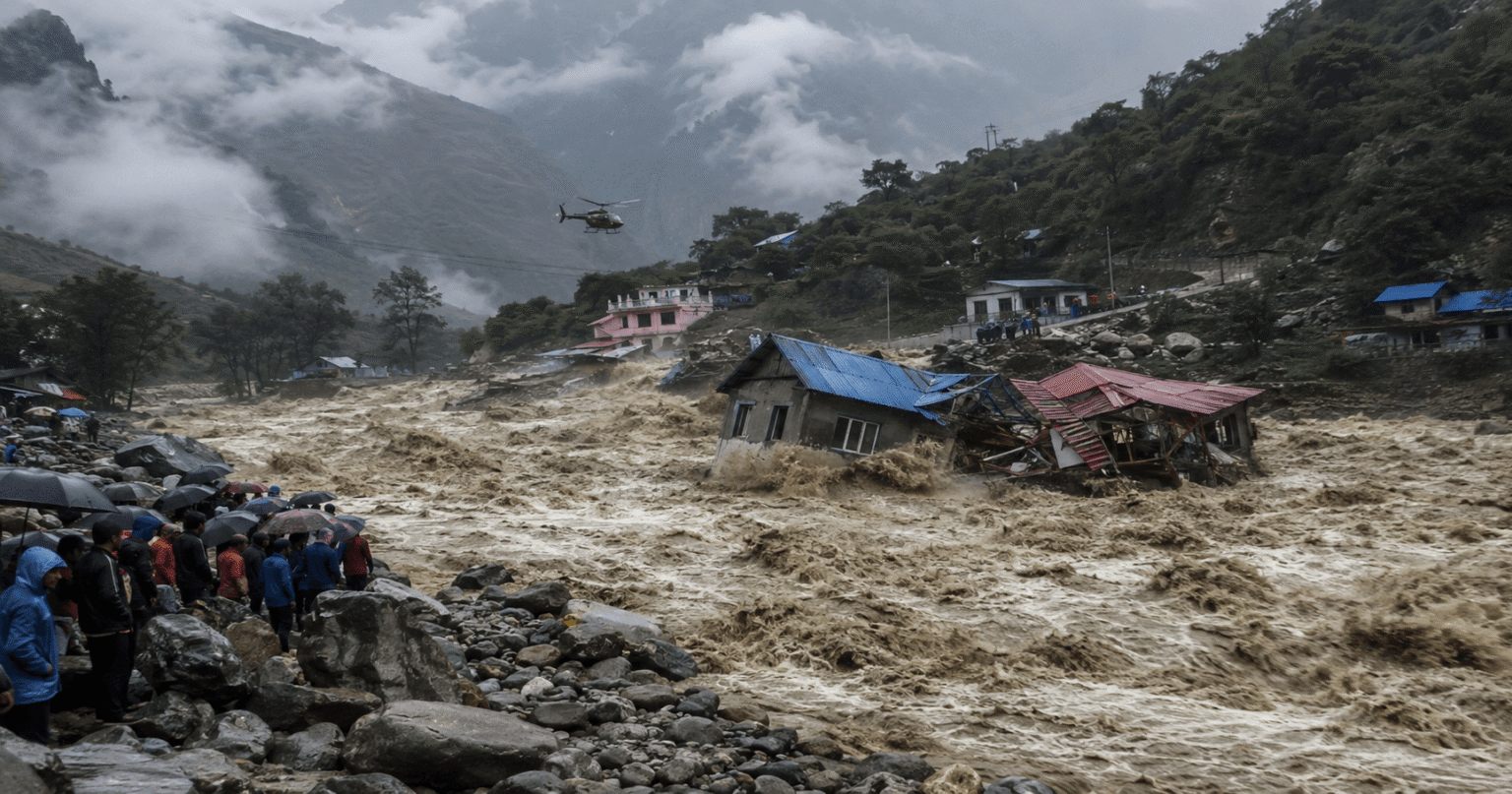

A wall of ice, rock and floodwater tore through remote valleys on the Nepal-Tibet border on the morning of Wednesday, August 26, sweeping away entire riverside settlements along the Trishuli River. Four days later, the confirmed death toll in Nepal has passed 620, with well over a thousand people still unaccounted for, and rescue teams are racing against fresh flood warnings to reach cut-off communities.
The disaster began when a huge section of rock and glacial ice broke away from a mountainside near Langtang Lirung in the Himalayas, triggering flash floods that ripped through a roughly 72-kilometre stretch of the Rasuwa and Nuwakot districts. The same event was strong enough to register as a magnitude 5.2 tremor on seismic monitors as far away as the United States and Germany.
The scale of the destruction is still coming into focus, with debris and victims found more than 150 miles downstream in neighbouring India, and a border trade hub between Nepal and China completely destroyed.
What Happened?
Nepali disaster officials say the flood struck without warning, flattening villages along the Trishuli River in minutes. Homes, bridges and roads were destroyed across Rasuwa and Nuwakot, two mountainous districts that sit along a major route linking Nepal to Tibet in China. The force of the water also wiped out the Gyirong Port complex, a key crossing point for trade and tourism between the two countries.
Across the border, Chinese authorities reported a smaller but still serious toll in the Tibet Autonomous Region, and warned that a new lake had formed upstream from debris blocking the river, raising fears of a second wave of flooding.
What We Know So Far
According to Nepal’s National Disaster Risk Reduction and Management Authority, the confirmed death toll in the country climbed from 579 on Friday to at least 626 by Saturday. More than 1,900 people remain listed as missing in Nepal alone, while Chinese state media has reported around 554 to 558 people unaccounted for on the Tibetan side, along with seven confirmed deaths there.
More than 3,700 people have been pulled to safety in Nepal so far, many airlifted by helicopter from flooded villages in the Nuwakot district. The Red Cross estimates that roughly 90,000 people have been affected in some way by the disaster. Among the missing are reportedly dozens of foreign nationals, including a number of American citizens who were travelling in the region at the time.
Why This Matters
This is already one of the deadliest natural disasters to hit Nepal in decades, striking a region already vulnerable to glacial and flash flooding as Himalayan temperatures rise. The destruction of the Gyirong Port also disrupts a major trade and travel link between Nepal and China, with economic effects likely to be felt for months. For families around the world, especially in the United States, the disaster has become a deeply personal story as they wait for word on missing relatives who were trekking or on pilgrimage in the area.
What Officials Said
Nepali authorities have repeatedly stressed that the situation remains fluid and that figures for the dead and missing are likely to change as rescue teams reach more remote areas. Police issued a fresh alert after receiving reports that a dam-like barrier lake on the Tibetan side of the border was at risk of overflowing, telling rescue workers and residents downstream to be ready to move to higher ground at short notice.
The U.S. State Department said it was aware of a large number of American citizens unaccounted for and set up a dedicated hotline for relatives seeking information, though officials have not confirmed any American deaths so far. Family members of those still missing have described a mix of fear and hope as the search continues.
What Happens Next?
Rescue operations are continuing in both Nepal and China, with helicopters remaining the only practical way to reach many of the worst-hit areas because roads and bridges have been washed away. Authorities in both countries are also closely monitoring the new barrier lake upstream, with further evacuations possible if it is at risk of breaching. It remains unclear how many of those currently listed as missing will eventually be found alive, and officials have not given a timeline for when search operations might wind down.
Background
Nepal’s mountainous terrain and monsoon climate make it especially prone to landslides and flash floods, and scientists have repeatedly warned that a warming climate is accelerating the melting of Himalayan glaciers, increasing the risk of sudden glacial lake outburst floods. The border area affected by this disaster is a remote but historically important route for trade and pilgrimage between Nepal and Tibet.
Key Takeaways
- A glacier and rockfall collapse near Langtang Lirung triggered flash floods along the Trishuli River on August 26.
- Nepal’s confirmed death toll has reached at least 626, with more than 1,900 people still missing in the country.
- China has reported 7 deaths and roughly 554 to 558 missing in the Tibet Autonomous Region.
- More than 3,700 people have been rescued in Nepal, many by helicopter.
- A new barrier lake upstream is raising fears of further flooding, and search operations are ongoing.
Frequently Asked Questions
What caused the Nepal-Tibet floods?
Officials believe a large section of rock and glacial ice collapsed near Langtang Lirung in the Himalayas, triggering flash floods along the Trishuli River.
When did the disaster happen?
The flooding struck on the morning of Wednesday, August 26, 2026.
How many people are missing?
As of the latest update, more than 1,900 people are missing in Nepal, with several hundred more unaccounted for in China’s Tibet region.
Are any Americans affected?
The U.S. State Department has said a number of American citizens remain unaccounted for, though no American deaths have been confirmed as of the latest reports.
Is the danger over?
No. Authorities are monitoring a newly formed lake upstream that could cause additional flooding, and search and rescue operations are continuing.
Sources
- NBC News
- CBS News
- Newsmax / Associated Press
- Wikipedia (2026 Nepal floods, background reference)