
American forces struck Revolutionary Guard sites after alleged attacks on shipping and troops, triggering Iranian missile retaliation on US bases across the Gulf region.
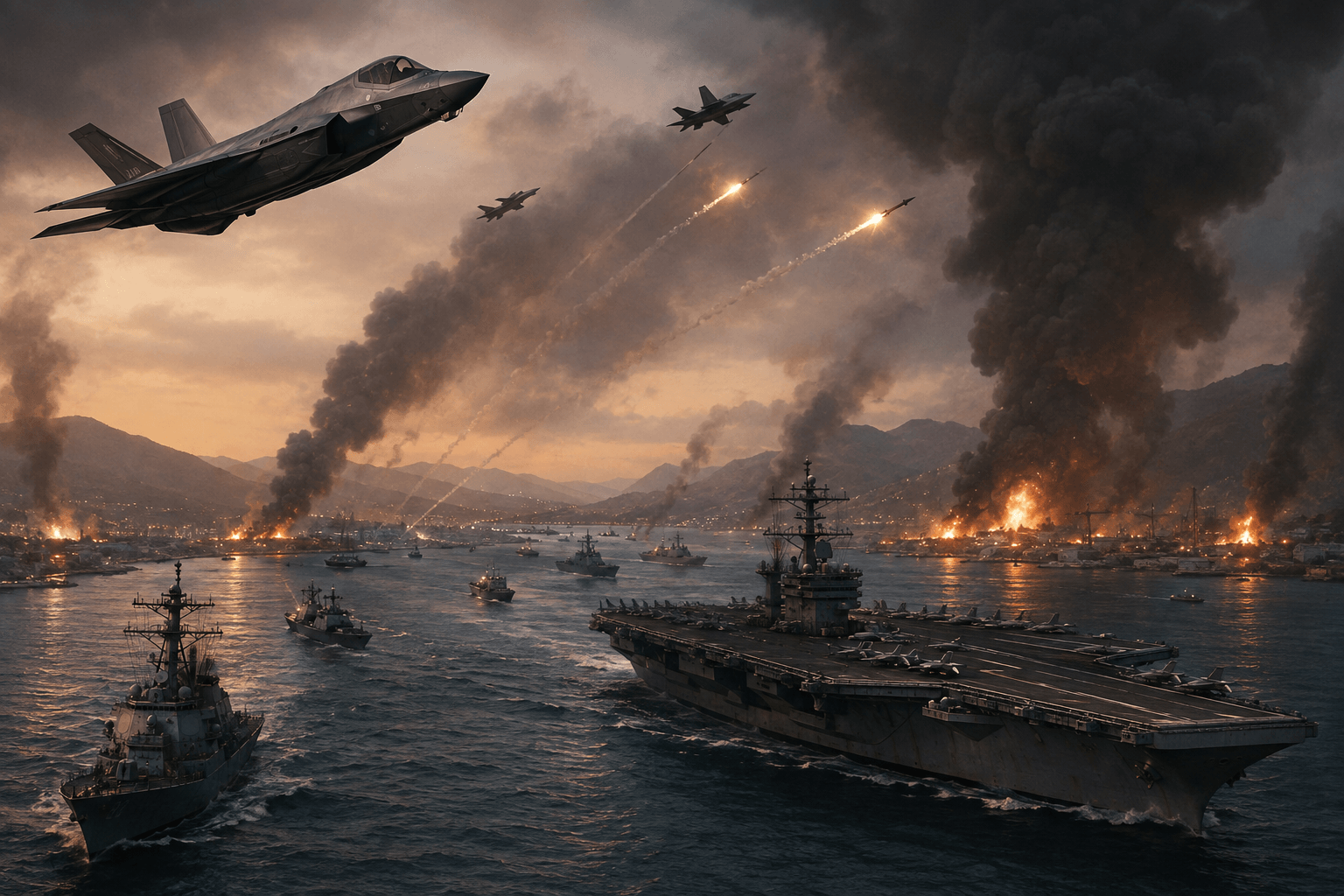
The United States and Iran are locked in an escalating military exchange centered on the Strait of Hormuz, after US forces struck Islamic Revolutionary Guard Corps (IRGC) sites in southern Iran this week. The strikes were launched in response to what US Central Command (CENTCOM) described as attempted attacks by the IRGC on commercial shipping and American troops stationed in the region.
Iran has since fired missiles at US military bases in Jordan, Bahrain and Kuwait, with air defense systems intercepting most of the projectiles. The confrontation is the latest flashpoint in a war between the two countries that has now stretched past six months, disrupting global oil markets and raising fears of a wider regional conflict.
WHAT HAPPENED?
CENTCOM said US forces began hitting IRGC targets in Iran on Tuesday at midday Eastern time, following reports that Iranian forces had attempted to lay mines in the Strait of Hormuz and had targeted American service members in the region. State-linked media in Iran reported explosions near the port city of Bandar Abbas, as well as in Qeshm, Chabahar, Konarak and Sirik.
The strikes came just days after a Saudi Arabian tanker and a South Korean tanker were struck by unidentified objects while transiting the strait, according to the United Kingdom Maritime Trade Operations Centre. Iran’s Revolutionary Guard later said two additional tankers had struck naval mines in the waterway, claims that CENTCOM disputed.
In response to the American strikes, Iran launched retaliatory missiles at US bases in Jordan. Jordanian officials said air defenses destroyed 10 of 13 incoming missiles. Iran also fired drones toward Kuwait and Bahrain on subsequent nights, marking a second consecutive night of attacks on US Gulf allies.
The exchange follows months of on-and-off hostilities that began on February 28, 2026, when the US and Israel carried out strikes on Iranian military sites. Since then, Iran has effectively closed the Strait of Hormuz to vessels linked to the US, Israel and their allies, prompting Washington to impose a naval blockade and later a renewed aerial campaign to keep the waterway open.
WHAT OFFICIALS / SOURCES ARE SAYING
CENTCOM said in a statement that the strikes followed “recent attempted attacks by the IRGC against commercial shipping in the Strait of Hormuz and against American service members deployed to the region.”
President Donald Trump warned of a harsher response if Iran retaliated, while an Iranian military source quoted by the Tasnim news agency said any Iranian response would be “several times greater” than the US strikes.
Separately, Iran’s Foreign Ministry accused the United States of a war crime after officials said a missile strike hit a wedding celebration, killing four people, including two children, and wounding more than 60. A CENTCOM spokesman said the military was reviewing the reports.
KEY FACTS
- Location: Strait of Hormuz, southern Iran, and US bases in Jordan, Bahrain and Kuwait
- Date: Strikes began September 1, 2026; retaliatory attacks continued into September 3
- Conflict duration: Ongoing since February 28, 2026 (over six months)
- Casualties in strait crisis: At least 20 seafarers and one port worker killed, 35 injured, one missing, according to Wikipedia’s tracking of the crisis
- Latest development: Jordan intercepted 10 of 13 Iranian missiles; drone attacks reported on Kuwait and Bahrain
WHY THIS MATTERS
The renewed strikes threaten to reignite a full-scale regional war just as diplomatic efforts had shown signs of a lull. Around a quarter of the world’s seaborne oil trade and a fifth of global liquefied natural gas shipments normally pass through the Strait of Hormuz, and the ongoing disruption has already pushed global fuel prices higher.
For American consumers, the conflict has kept average US gasoline prices elevated, reported at $4.12 a gallon this week according to AAA data cited by industry briefings. The war has also become a political liability for President Trump’s Republican Party ahead of the November midterm elections, with rising fuel costs and instability abroad weighing on public opinion.
BACKGROUND
The current war traces back to February 28, 2026, when the United States and Israel launched strikes on Iranian military and nuclear-linked targets. Iran responded by closing the Strait of Hormuz to shipping tied to the US, Israel and their allies in late March. Washington answered with an aerial campaign to reopen the strait and, from mid-April, a naval blockade of Iranian ports.
A brief pause in hostilities in May, followed by renewed strikes in July, failed to produce a lasting ceasefire. By late August, the US Navy said it had cleared more than 100 suspected mines from the strait’s shipping lanes. President Trump has said the US would destroy any Iranian vessels caught laying further mines.
WHAT HAPPENS NEXT?
Analysts say further tit-for-tat strikes are likely in the near term, with oil markets remaining highly sensitive to any new escalation. Diplomatic channels remain open but have so far failed to produce a durable truce. Regional governments, including Jordan, Kuwait and Bahrain, are expected to reinforce air defenses as Iranian drone and missile attacks continue to target US installations in the Gulf.
LATEST UPDATE
As of September 4, the situation remains volatile, with both sides continuing military action and no confirmed ceasefire talks announced. Further developments are expected as CENTCOM and Iranian state media continue to report on strikes across the region.