How a Glacier Collapse Triggered Nepal’s Deadliest Flash Flood in Decades

A sudden landslide of ice and rock high in the Himalayas unleashed a wall of mud and water that erased entire villages along the Nepal-China border, leaving thousands dead or missing.
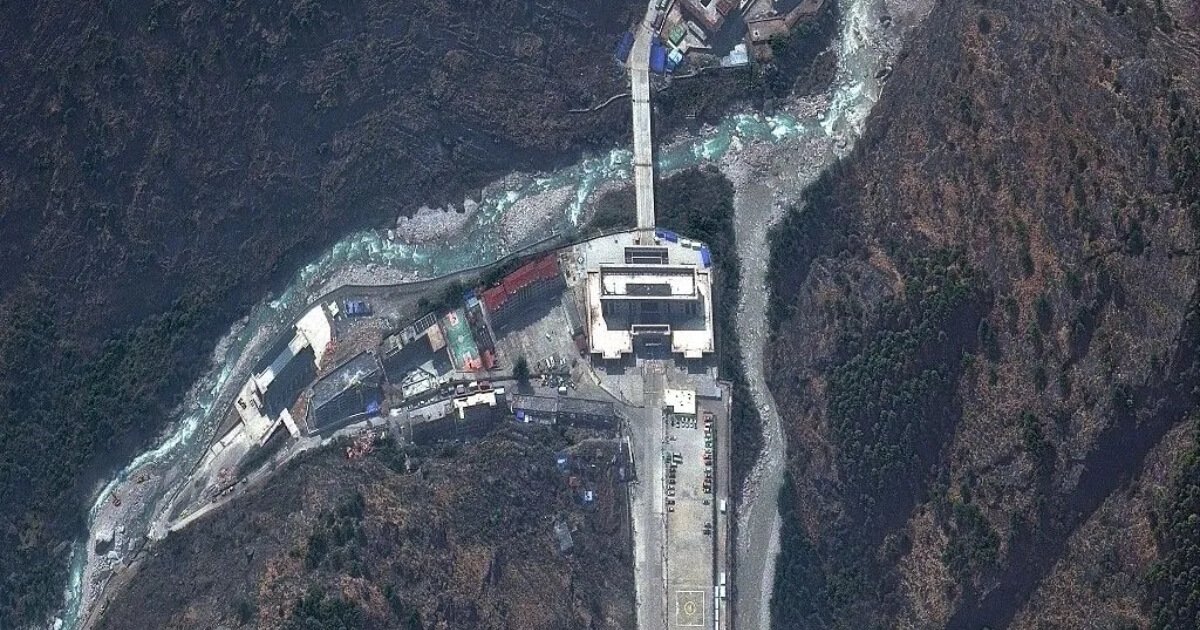
A catastrophic flash flood tore through the remote Bhote Koshi gorge on the border between Nepal and China’s Tibet region on the morning of August 26, 2026, destroying the Rasuwagadhi border crossing, sweeping away bridges, roads and hydropower plants, and burying towns and villages under mud and debris.
The disaster began when a large mass of ice and rock broke away in the mountains above the Lhende Khola, a tributary that meets the Bhote Koshi River right at the border post. The resulting surge tore south through the trading town of Timure, the trekking hub of Syabrubesi, and onward down the valley toward Trishuli Bazar, before bodies began turning up tens of kilometers downstream on the plains of Chitwan and Nawalparasi.
WHAT HAPPENED?
According to Nepal’s disaster authorities, the flood struck without meaningful warning early on Wednesday, August 26. Surveillance footage from the Rasuwagadhi crossing showed a wall of mud overtaking parked trucks and buses “like toys” before crowds fleeing on foot were engulfed. Within moments, officials say, the border complex, its customs yard and surrounding buildings were reduced to rubble.
The surge continued downstream, cracking apart and washing away multiple bridges, including a crossing at the same location that had been rebuilt after an earlier, smaller flood in July 2025. Nepal’s Energy Ministry said the flood knocked out roughly 431 megawatts of power generation, damaging both operating hydropower stations and projects still under construction.
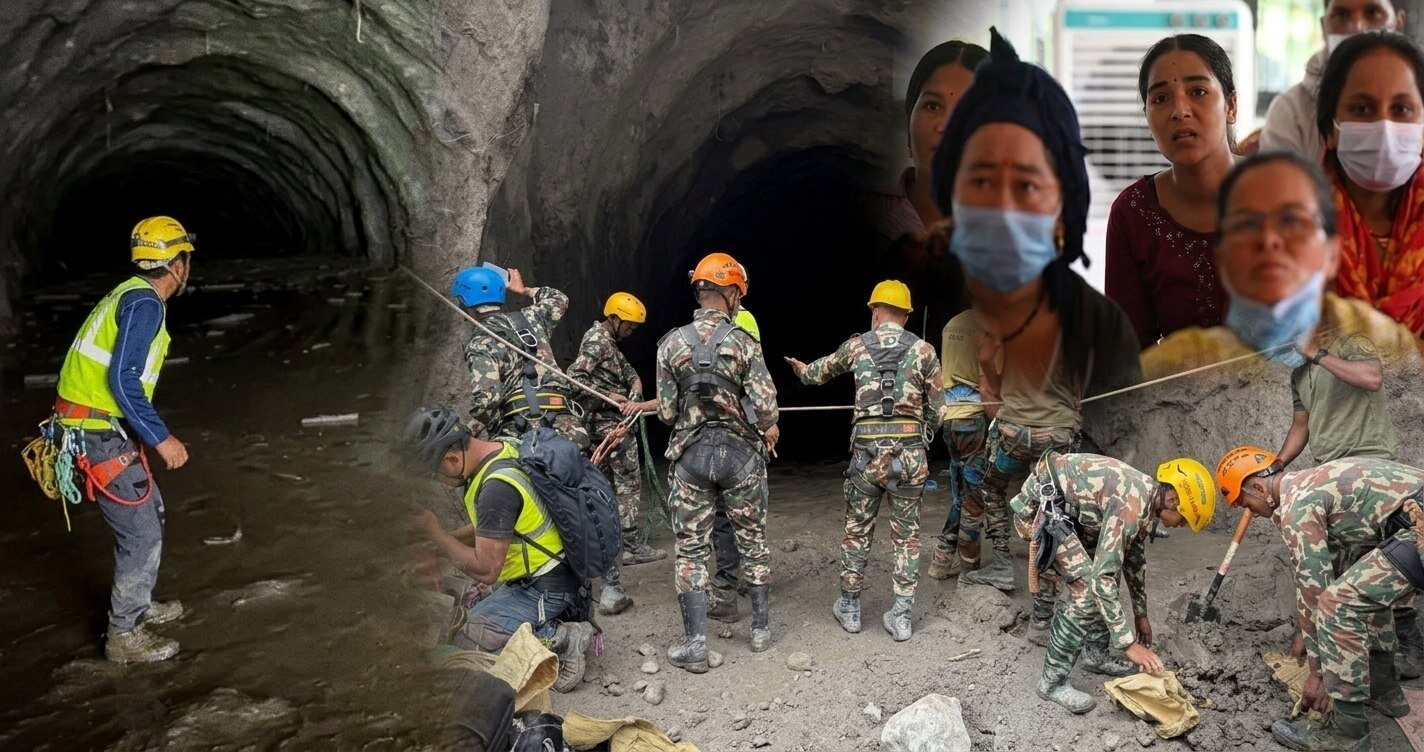
On the Chinese side, officials in Gyirong County reported that the mudslide destroyed the border crossing’s administrative complex and cut off road access, communications and electricity to the area. Rescue workers who eventually reached the site described it as flattened, with “no discernible outline of any structures,” according to a Chinese rescue team leader quoted by state broadcaster CCTV.
As the days passed, the confirmed death toll climbed steadily as search teams worked their way through the debris field and recovered bodies far downstream. By a Nepali disaster authority bulletin issued at 9 a.m. on August 31, at least 903 people had been confirmed dead in Nepal, with 4,247 people still listed as missing. In Tibet, Chinese authorities reported 16 confirmed deaths and 546 people missing as of the same period.
Recovery efforts have been complicated by the flood’s reach: officials say bodies have been recovered as far away as Chitwan, Nawalparasi, Gorkha, Dhading, Nuwakot and Tanahun districts — in some cases dozens of kilometers from where the flood began in Rasuwa.
WHAT OFFICIALS / SOURCES ARE SAYING
Nepal’s National Disaster Risk Reduction and Management Authority said satellite imagery pointed to a landslide-triggered debris flow originating in the Lhende River basin, a conclusion consistent with a similar, smaller event in the same area in July 2025.
Chinese state media reported that officials in Gyirong County were monitoring newly formed “barrier lakes” created when landslide debris dammed the river, warning they could cause fresh flooding downstream, including at the rebuilding Gyirong Port.
A scientist with the U.S.-based Planetary Science Institute, speaking to a broadcast interviewer, said aerial images of a second such lake forming in the mountains were “extremely concerning,” warning that if the upper lake breached its banks, the water could combine with the lower dammed lake and “burst out very, very rapidly.”
U.S. officials said dozens of American citizens were among the missing, and the White House said the United States was prepared to offer assistance to Nepal.
KEY FACTS
- Location: Rasuwagadhi border crossing, Bhote Koshi gorge, Rasuwa district, Nepal, and Gyirong County, Tibet Autonomous Region, China
- Date: Flood struck the morning of August 26, 2026
- Cause: A landslide of ice and rock in the Lhende Khola basin, consistent with earlier glacial lake outburst activity in the same area
- Deaths (as of August 31): At least 903 confirmed in Nepal; 16 confirmed in Tibet
- Missing (as of August 31): 4,247 in Nepal; 546 in Tibet, including over 500 foreign nationals from more than 30 countries
- Infrastructure damage: Rasuwagadhi border post and customs yard destroyed; multiple bridges washed away; roughly 431 MW of power generation knocked offline; sections of the only overland road link between Kathmandu and Tibet destroyed
- Ongoing risk: Newly formed barrier lakes upstream raise concern about additional flooding
WHY THIS MATTERS
The disaster has disrupted one of the few overland trade and pilgrimage corridors between Nepal and China, cutting off a route used by traders, hydropower workers, and pilgrims and trekkers heading toward Mount Kailash and the Langtang region.
The scale of foreign nationals affected — including tourists and trekkers from dozens of countries — has drawn international attention and prompted offers of assistance from other governments. Scientists have also pointed to the flood as part of a broader pattern of glacial and high-altitude instability in the Himalayas, raising concerns about the risk of similar events as the region’s climate continues to warm.
BACKGROUND
The Rasuwagadhi area has a documented history of glacial lake outburst floods. In July 2025, a smaller flood in the same Lhende River basin destroyed the Nepal-China Friendship Bridge at the same border crossing and killed more than a dozen people; Nepal’s Department of Hydrology and Meteorology attributed that earlier event to a supraglacial lake outburst roughly 36 kilometers north of the border. The bridge had only recently been rebuilt before this year’s far larger disaster struck the same stretch of river.
WHAT HAPPENS NEXT?
Nepal’s Army, Armed Police Force and Nepal Police, supported by helicopters and medical teams, continue search, rescue and relief operations across the affected districts. Authorities are expected to continue issuing updated casualty figures as recovery work proceeds and as access to remote areas improves.
Scientists and disaster officials are monitoring the newly formed barrier lakes upstream of the disaster zone for signs of a further breach, and residents in downstream areas have been warned to remain alert to the possibility of renewed flooding.
LATEST UPDATE
As of the most recent official bulletin on August 31, more than 900 people had been confirmed dead in Nepal and thousands remained missing on both sides of the border. The situation remains ongoing, and further details are expected as officials continue their investigation and search operations.