

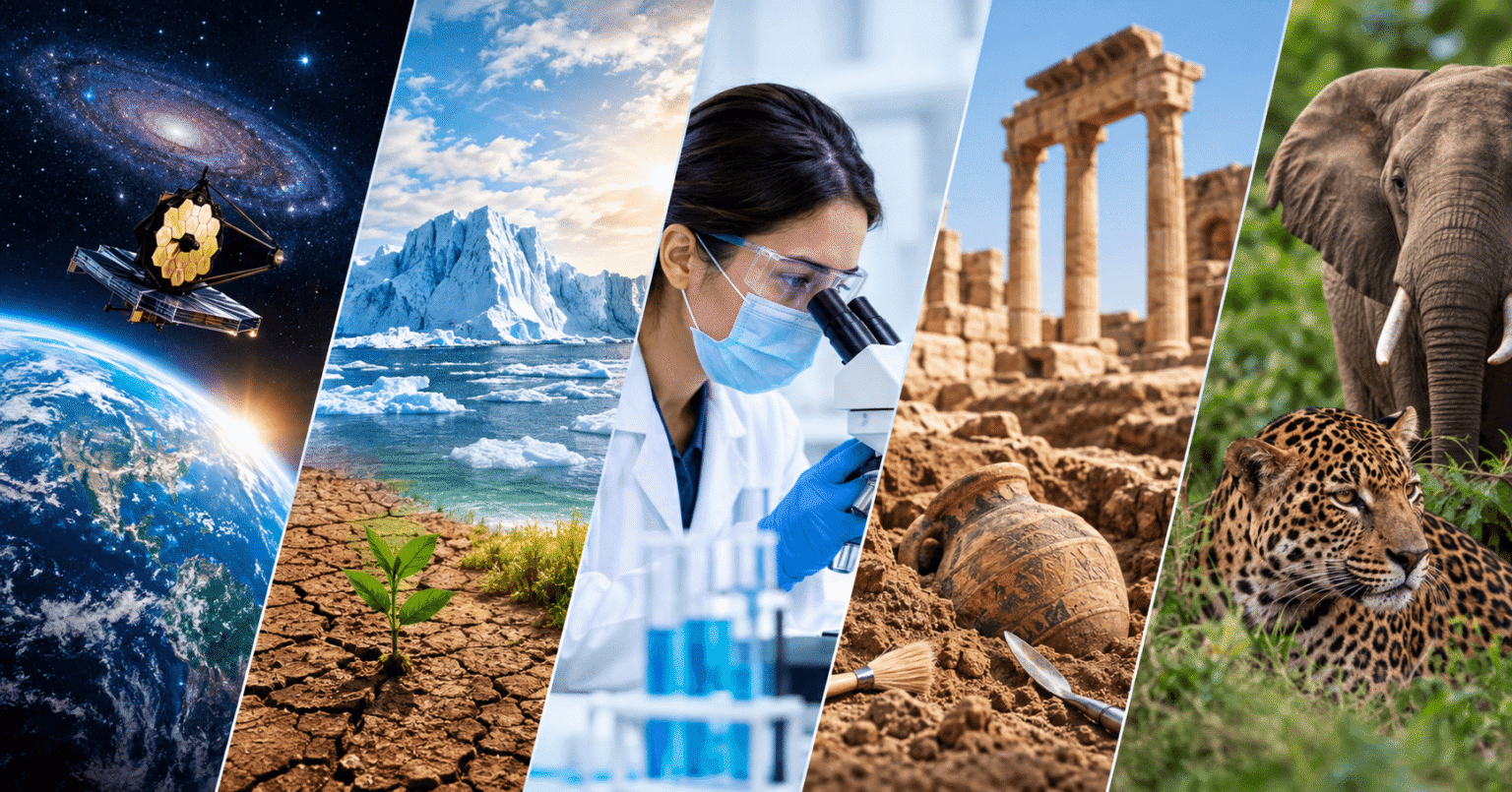

Science coverage stretches across an enormous range of topics, from distant galaxies to microscopic biology to discoveries buried underground for thousands of years. For readers without a scientific background, this breadth can make science news feel intimidating. In practice, most science stories fall into a handful of recurring categories, and understanding those categories makes the coverage far easier to follow and appreciate.
Space Exploration and Astronomy
Space coverage spans everything from government-led missions to the rapid growth of private space companies. Stories in this category typically cover new discoveries about planets, stars, and galaxies, progress on crewed and uncrewed missions, and the technology being developed to explore beyond Earth. Space news tends to capture public interest because it combines cutting-edge engineering with fundamental questions about the universe and humanity’s place within it.
Climate Science and Environmental Research
Climate coverage focuses on the science behind a changing planet, including research into temperature trends, weather patterns, and the ecological effects of environmental change. This category also covers the technologies and policies being developed in response, from renewable energy research to conservation efforts. Because climate science intersects with policy and economics, this coverage often connects to business and political reporting as governments and industries respond to new research.
Medicine and Health Research
Medical science coverage tracks new research into diseases, treatments, and public health, translating complex studies into information readers can actually use. This includes coverage of new medical technologies, ongoing research into chronic and infectious diseases, and evolving public health guidance. Because medical findings can be preliminary or later revised as more research is conducted, careful science reporting distinguishes between early-stage studies and well-established medical consensus.
The Ancient World: What Archaeology Reveals
Archaeology and ancient history coverage brings new discoveries about past civilizations to modern audiences, from newly uncovered ruins to advances in the scientific techniques used to study old artifacts and remains. This category often connects cutting-edge science, such as improved dating methods and genetic analysis, with age-old questions about how earlier human societies lived, traded, and organized themselves.
Wildlife and the Natural World
Coverage of animals and ecosystems ranges from newly identified species to research on animal behavior and conservation efforts aimed at protecting threatened wildlife. This area of science reporting often highlights the connections between individual species and the broader health of an ecosystem, illustrating how changes in one part of the natural world can have ripple effects elsewhere.
How to Evaluate Science News Critically
Not all science stories carry the same level of certainty. A single study, particularly an early or small-scale one, should generally be treated as one data point rather than settled fact. Readers benefit from checking whether a finding has been peer-reviewed, whether other researchers have been able to replicate the results, and how a story’s headline compares to the actual conclusions described in the underlying research. Good science journalism typically includes this context, helping readers understand not just what was found, but how confident researchers actually are in the result.
Why do some science stories seem to contradict earlier reports?
Science is an ongoing process, and new research can refine or update earlier findings as more data becomes available, which is a normal part of how scientific understanding develops over time.
Why is space exploration increasingly driven by private companies?
Advances in technology and reduced launch costs have allowed private companies to compete alongside government space agencies, expanding the pace and scope of space-related research and missions.
How can I tell if a medical study is reliable?
Look for peer-reviewed research published in reputable journals, note the size and design of the study, and be cautious about drawing firm conclusions from a single early-stage study.
Why does archaeology still matter in the modern world?
Studying past civilizations helps researchers understand long-term patterns in human behavior, migration, and society, offering context that can inform how modern societies think about culture and history.